Distributed infrastructure
Designing a high-performance distributed cloud infrastructure for processing data from solar PV systems
Industry: Energy
Client: Peimar
Context
Monitoring thousands of solar PV systems.
Problem
High loads and the need for elastic scalability without manually managing peaks.
Solution
A cost-optimised distributed architecture that handles large volumes of data reliably.
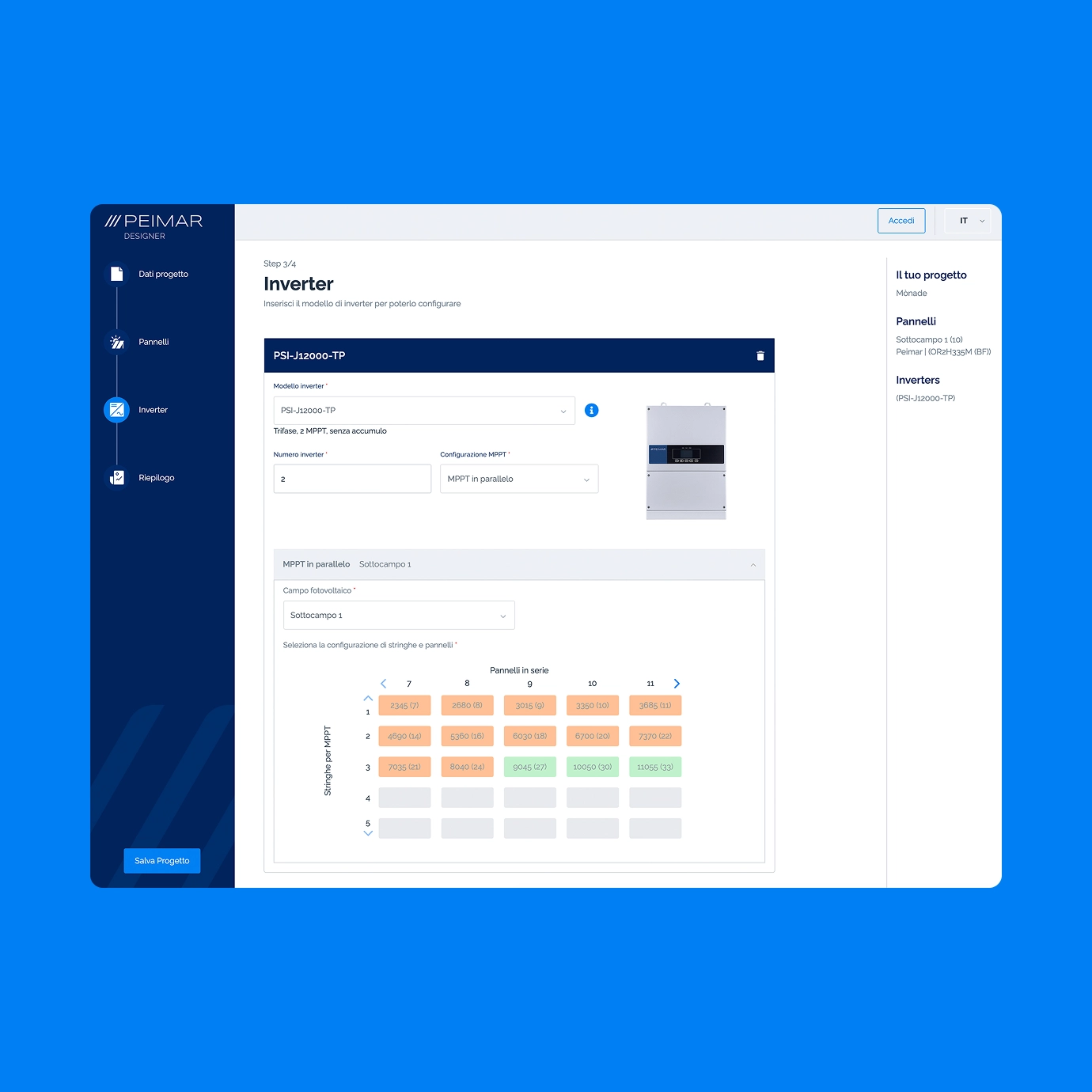
Peimar is an Italian company specialising in the manufacture of solar panels and solar energy solutions. With an extensive network of resellers and installers, the company recognised the need to offer digital tools that would simplify the management and maintenance of PV systems, while improving the user experience for industry professionals and end customers.
Challenge
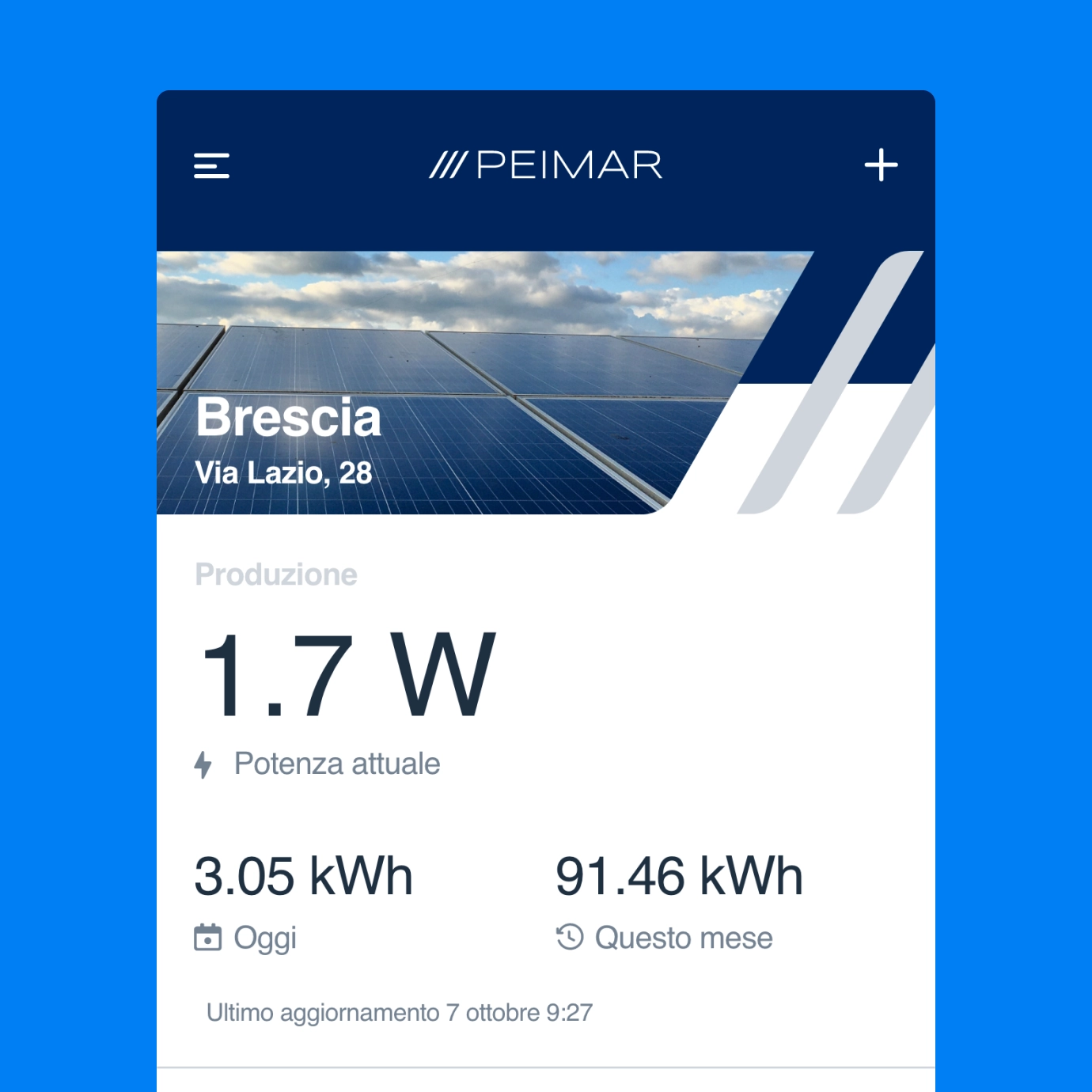
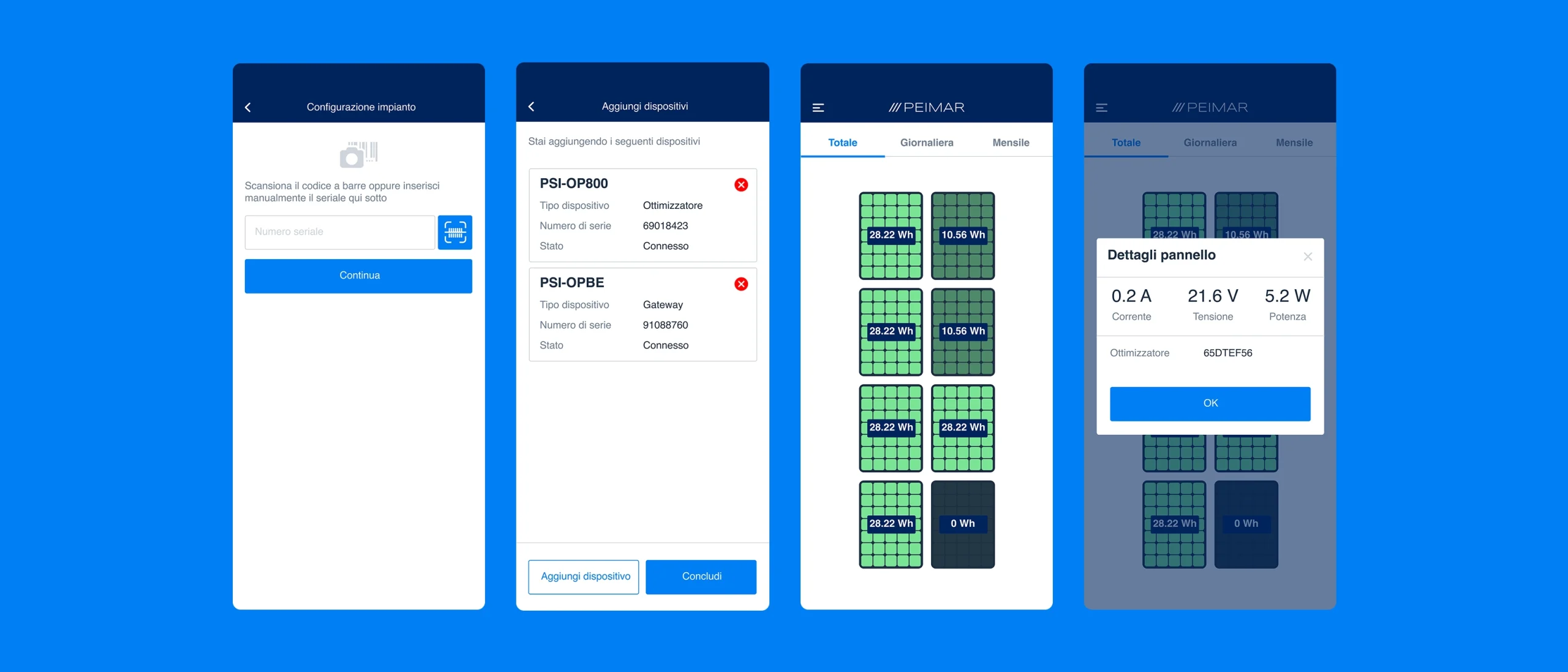
Peimar was preparing to handle the installation of over 10,000 solar PV systems. Each system was made up of groups of panels controlled by devices called optimisers, which monitor the output of each group and send the collected data every 15 minutes to a remote server over a custom TCP/IP protocol.
The infrastructure had to handle an average load of around 7,000 requests per minute, while ensuring reliability, scalability and controlled operating costs.
Solution
Mònade designed a distributed system that separates data collection from storage and processing, optimising performance at every stage of the flow.
A high-performance server written in Rust collects the raw data from the optimisers and writes it with minimal latency to AWS DynamoDB, a distributed, scalable NoSQL database. The server is deployed on ECS with Fargate, with autoscaling rules that allow it to scale out within seconds when traffic peaks.
The data stored in DynamoDB is then processed and aggregated by AWS Lambda functions, triggered by DynamoDB Streams, which work in batches of 10,000 records or at 30-minute intervals. Finally, the consolidated data is stored in Amazon Aurora for PostgreSQL, a partitioned relational database optimised for querying and analysis.
The whole system is designed to optimise operating costs by adapting automatically to production patterns: for example, at night, when the PV systems are inactive, allocated resources are scaled down dynamically.
Result
The infrastructure has enabled Peimar to scale with the growing number of PV systems, with minimal human intervention and no service interruptions.
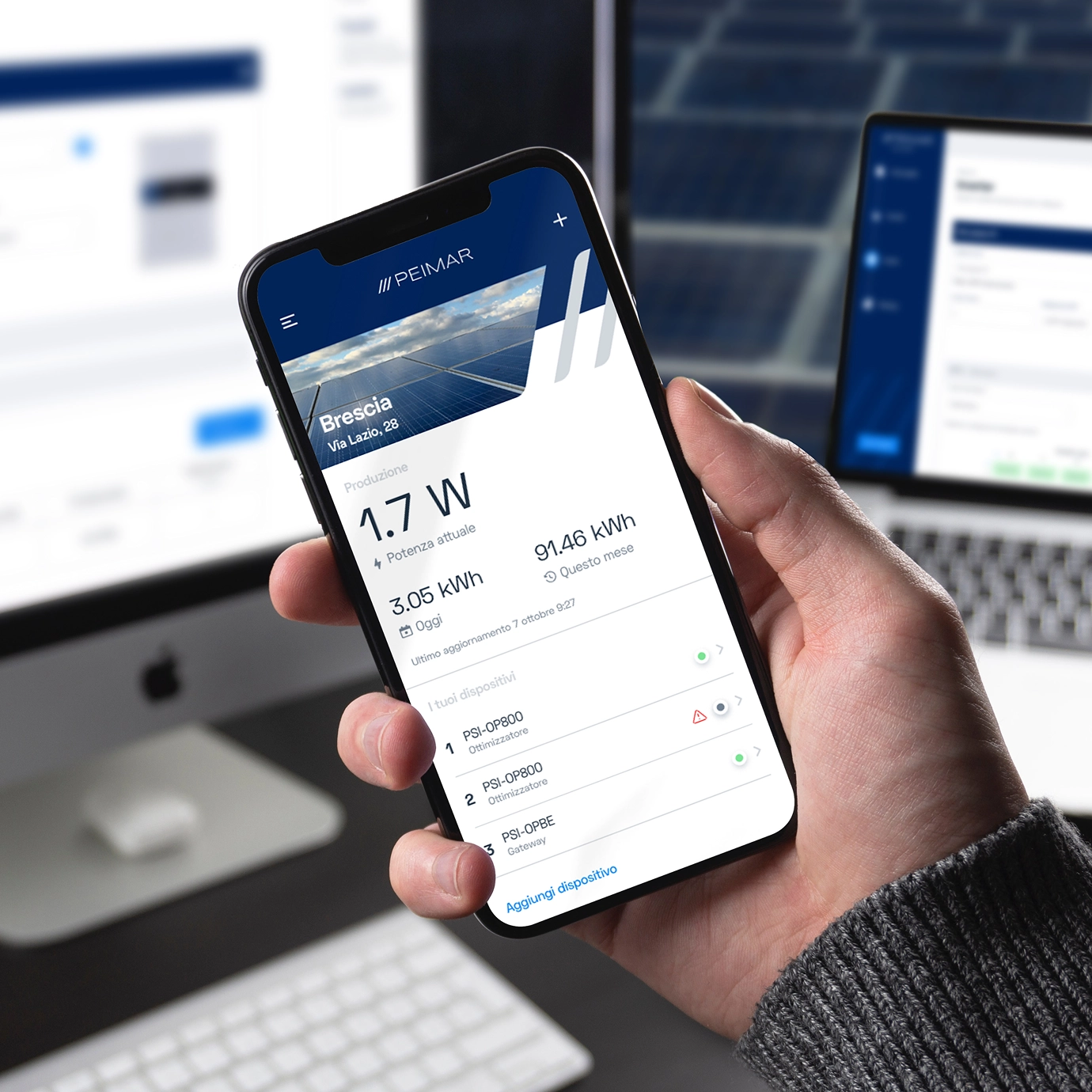
The system has proved stable, efficient and cost-effective, enabling reliable, continuous data management for thousands of devices spread across the country.
More case studies
EVA – Engineering project management
An app that centralises jobs and standardises workflows, reducing errors and improving traceability.
SIAD Macchine Impianti · Energy
EVA AI – Virtual assistant
An AI-powered assistant that helps engineers put together project documentation.
Siad Macchine Impianti · Energy
Job monitoring software
A centralised app that assigns tasks, sends notifications and provides real-time operational and financial traceability.
FG Valvole · Energy